Skip to content
Pittsburgh Foundation Repair Co.

Serving Pittsburgh and nearby areas

Cracks in Brick in Pittsburgh, PA

Cracks in brick can be old mortar wearing out or a sign the foundation is moving, and a free inspection tells you which one you have and what the fix costs.

Book a free foundation inspection

Tell us what you are seeing. A local specialist calls you back the same business day.

Local to Pittsburgh

We connect property owners in Pittsburgh and nearby areas, including Mount Washington, Polish Hill, Spring Hill, Lincoln Place, Bon Air and Lawrenceville, with one independent local foundation repair specialist.

What it costs

Typical published ranges for Pittsburgh. The contractor's written estimate is the price, and the inspection is free.

WorkTypical range
Inspection and written estimate Free
Repointing brick $3 to $15per square foot
Tuckpointing brick $5 to $25per square foot
Tuckpointing, 100 square foot section $500 to $2,500
Steel push pier, if the corner has settled $1,000 to $3,000per pier
Structural engineer visit $250 to $500

See typical foundation repair prices in Pittsburgh

Brick is everywhere in Pittsburgh. Whole blocks of brick row houses, like those in the Lawrenceville historic district, have stood for well over 100 years. Brick lasts, but the mortar between the bricks wears out, and the ground under the house can shift. A crack in brick is the house telling you which one is happening.

What you will notice

Stair-step cracks

The crack follows the mortar joints up and over like stairs. This is the most common brick crack.

A crack that is wider at the top

Or the bottom. One part of the wall is moving more than the rest.

A straight up-and-down crack

Through the bricks themselves, often near a corner or under a window.

Sandy, crumbling mortar

You can scrape out with a key.

Bricks that flake, pop or crumble

On the face. This is called spalling.

Cracks above windows and doors,

Often with a sagging steel lintel over the opening.

A wall that bulges

Or a chimney that leans or pulls away.

Cracks that come back

After they are patched.

Why brick cracks in Pittsburgh

Old houses. About half of the city's homes were built before 1940. Much of that old brick was laid with soft, lime-rich mortar, which slowly washes out over the decades.

Soot and freeze-thaw. The Pittsburgh History and Landmarks Foundation notes that many older houses here have suffered from years of soot from the mills and from freeze and thaw, which causes cracks as water gets in. Each winter, water in the joints freezes, swells and opens them a little more.

The wrong mortar. Many old walls were patched with hard cement mortar. The National Park Service guide on repointing warns that new mortar must be softer than the brick. When it is harder, the brick takes the stress and the water instead, and its face cracks or pops off.

Water from above. A leaking gutter or a downspout that runs down the wall can wash mortar out of one area fast. The Park Service says to fix the water problem before repointing.

Ground movement. Settling, a moving hillside or an old mine under the house can crack brick in a way no mortar can fix. The state lists brick cracks as one of the common signs of mine subsidence.

Is it the mortar or the foundation?

A few clues help you tell the difference:

  1. Mortar wear: many small, even cracks spread over the wall, crumbly joints, no change in doors or floors inside.
  2. Foundation movement: one main crack that is wider at one end, cracks near corners or from window corners to the ground, and inside signs like sticking doors, sloping floors or drywall cracks on the same side.
  3. Water damage: cracks and flaking clustered under a gutter, downspout, leaky window sill or chimney cap.

If you are not sure, the inspection checks the brick, the foundation below it and the rooms inside.

When it is minor and when it is urgent

Usually minor: hairline stair-step cracks in old mortar that are not growing, and a few flaking bricks under a drip. Plan for repointing.

Call soon:

  • A crack is wider than about a quarter inch or wider at one end.
  • Cracks grow from month to month.
  • Doors and windows on that side of the house start to stick.
  • A chimney or porch is pulling away.

Urgent: bricks falling out, a wall that bulges outward, or a chimney leaning. Keep people away from that side of the house and call (412) 990-2570.

How brick cracks usually get fixed

Repointing

Old mortar is raked out and new mortar matched to the soft old brick is packed in.

Brick replacement

Spalled or broken bricks are cut out and replaced with a close match.

Lintel repair

A rusted steel lintel over a window is cleaned, painted or replaced, and the brick above is relaid.

Fixing the water

Gutters, downspouts, chimney caps and window sills come first.

Foundation repair

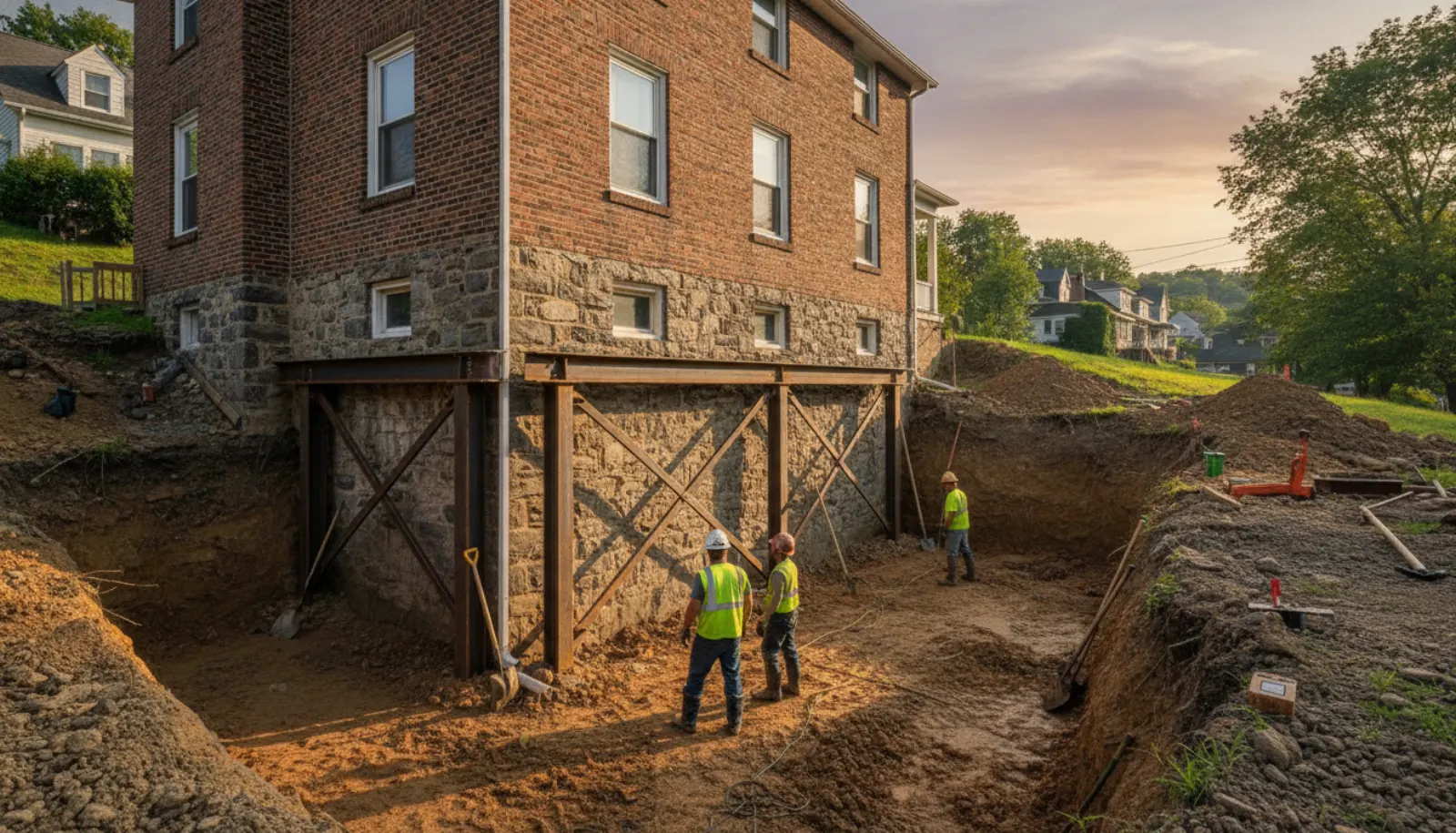
If part of the house has settled, piers under that corner come before any brick work. Otherwise new mortar cracks again.

What it costs

These are typical ranges from published cost guides, not quotes. Work above about 8 feet often costs more because of ladders and scaffolding.

What to do before the inspection

  1. Photograph each crack with a ruler or coin for scale, and date the photos.
  2. Mark the ends of the larger cracks with a pencil.
  3. Check inside the same wall for drywall cracks and sticking doors.
  4. Watch the wall in a storm to see where water runs down it.
  5. Do not smear caulk or cement over the cracks yet. The inspector needs to see them.

Then call (412) 990-2570 or send the short form to book a free inspection with a local crew.

Frequently asked questions

Are stair-step cracks in brick bad?

Not always. A short stair-step crack in old mortar can just be wear. A crack that is wider at one end, keeps growing, or runs from a window to the ground often means part of the house has settled. Have it checked.

What is the difference between tuckpointing and repointing?

Repointing means raking out old mortar and packing in new. Tuckpointing is a type of repointing that adds a thin line of colored mortar for looks. Both fix worn joints. Neither fixes a foundation that is still moving.

Can I just fill brick cracks with caulk?

Caulk keeps water out for a short time. It does not fix the cause. On old brick, the wrong filler can trap water and make the brick flake.

Why is my brick flaking or popping off?

Water gets into the brick, freezes and pushes the face off. This is called spalling. Hard cement mortar on soft old brick makes it worse, because the water has nowhere to go but through the brick.

Do I need a foundation contractor or a mason?

If the cracks are only in worn mortar, a mason can repoint them. If the cracks are wide, growing or tied to sticking doors and sloping floors, have the foundation checked first. Repointing over a moving wall just cracks again.

(412) 990-2570 Free inspection