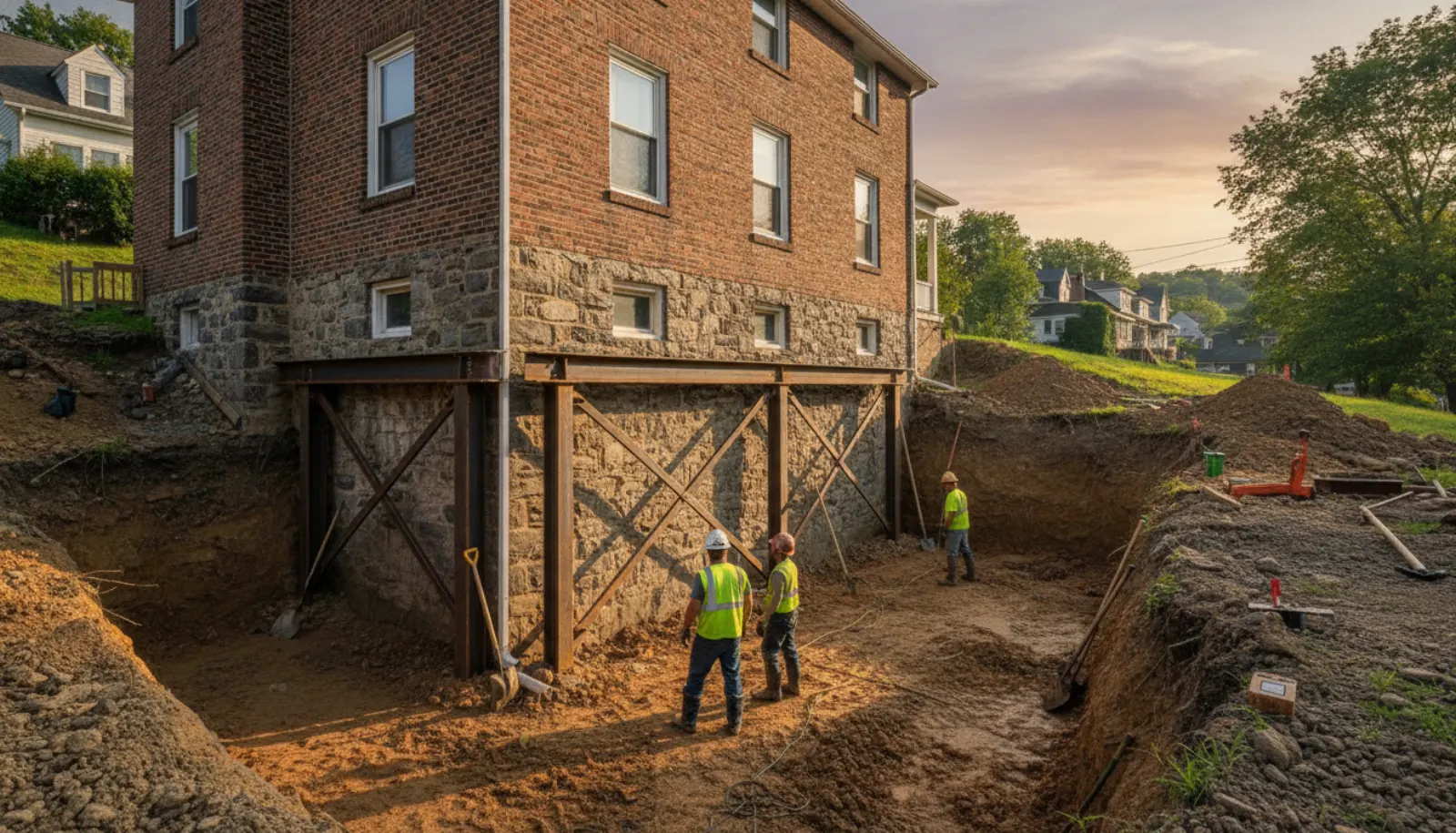
Many older Pittsburgh homes stand on walls of stacked stone held together with lime mortar. These walls were built long before poured concrete was common, and many still do their job. But the mortar between the stones slowly turns back to sand. When enough of it is gone, water pours in, stones loosen and the wall can start to lean.
What you will notice
Sand on the basement floor
It collects along the base of the wall, especially after wet weeks.
Mortar you can scrape out by hand
Or with a key, sometimes inches deep.
Loose or missing stones,
Or gaps you can see light or feel air through.
Water seeping through the joints,
Not just at one crack.
White crust or powder
On the stones where water dries.
Old cement patches peeling off
In sheets.
A wall that leans in or bulges,
Often on the uphill side of the house.
Musty air and mold
On wood that touches the wall.