Skip to content
Pittsburgh Foundation Repair Co.

Serving Pittsburgh and nearby areas

Landslide and Hillside Damage in Pittsburgh, PA

A slope that cracks, slumps or pushes on your house is a warning sign of landslide damage, and a free inspection tells you how serious it is and what can be done.

Book a free foundation inspection

Tell us what you are seeing. A local specialist calls you back the same business day.

Local to Pittsburgh

We connect property owners in Pittsburgh and nearby areas, including Mount Washington, Polish Hill, Spring Hill, Lincoln Place, Bon Air and Lawrenceville, with one independent local foundation repair specialist.

What it costs

Typical published ranges for Pittsburgh. The contractor's written estimate is the price, and the inspection is free.

WorkTypical range
Inspection and written estimate Free
Structural engineer visit $250 to $500
Steel push pier $1,000 to $3,000per pier
Helical pier $1,200 to $4,400per pier
Concrete retaining wall $30 to $50per square foot of wall face

See typical foundation repair prices in Pittsburgh

Pittsburgh is a city of hills, and many homes sit on slopes that were cut, filled and built on a century ago. When the ground under or behind a house starts to move, the damage can grow fast. This page covers what slope movement looks like, why it happens here, and what can be done about it.

What you will notice

The U.S. Geological Survey lists these signs that a slope may be moving. Most of them show up before a slide is obvious:

New cracks in the ground

In the yard, the driveway, the sidewalk or the street above or below you.

A bulge or a step in the slope

Soil at the bottom of a hill pushes out while the top drops.

Water where it never was

New wet spots, springs or puddles on the hillside.

Tilting trees, fences or poles

Power lines that sag or pull tight.

Doors and windows that start to stick

New cracks in walls, ceilings or the foundation.

Soil pulling away from the house

A gap opens between the foundation and the ground, or a porch or step pulls off.

Broken or leaking pipes

Water, sewer or gas lines can snap when the ground shifts.

Retaining walls that lean,

Crack or push out at the bottom.

Why Pittsburgh hillsides slide

The red beds. Many local hillsides have a clay-rich layer known as the Pittsburgh red beds. A Duquesne University geologist told WPXI that this clay gets slippery when it is wet and saturated. It is often the first layer to go in a slide.

Rain and snow melt. In 2018, Pennsylvania's wettest year on record, Pittsburgh and the counties around it had more than 200 landslides. The city's repair bill for that year alone was about $12 million. Winter and spring are the worst seasons, when rain and melting snow soak the soil.

Old cuts and fill. Many hillside streets were carved out long ago. Loose fill, old retaining walls and blocked drains on a slope all make it weaker. A USGS guide for Allegheny County buyers warns against adding weight, digging into the slope, or changing how water flows on it.

It happens to real streets. In Spring Hill, homes were evacuated after a slide. In Penn Hills, three homes were condemned. In Moon Township, slow slope movement has damaged homes over several years.

When it is minor and when it is urgent

Watch it: a small crack in a flat part of the yard, a little soil washing down after a storm, or one hairline crack inside that does not grow. Mark it, photograph it and check after each heavy rain.

Call soon:

  • Cracks in the yard get longer or wider.
  • A retaining wall starts to lean.
  • Doors that used to close fine now stick, and new cracks show up inside.
  • The foundation has a gap between it and the soil.

Urgent: the ground drops, the house makes cracking or popping noises, walls or floors tilt, or a gas or water line breaks. The USGS says to leave if a slide is underway and it is safe to do so. Call 911 for a gas leak, then your municipality. Call (412) 990-2570 to set up a look at the house once it is safe.

How hillside damage usually gets fixed

Every hillside job is different, so the fix comes from the inspection, and on bigger jobs from an engineer.

Piers under the house

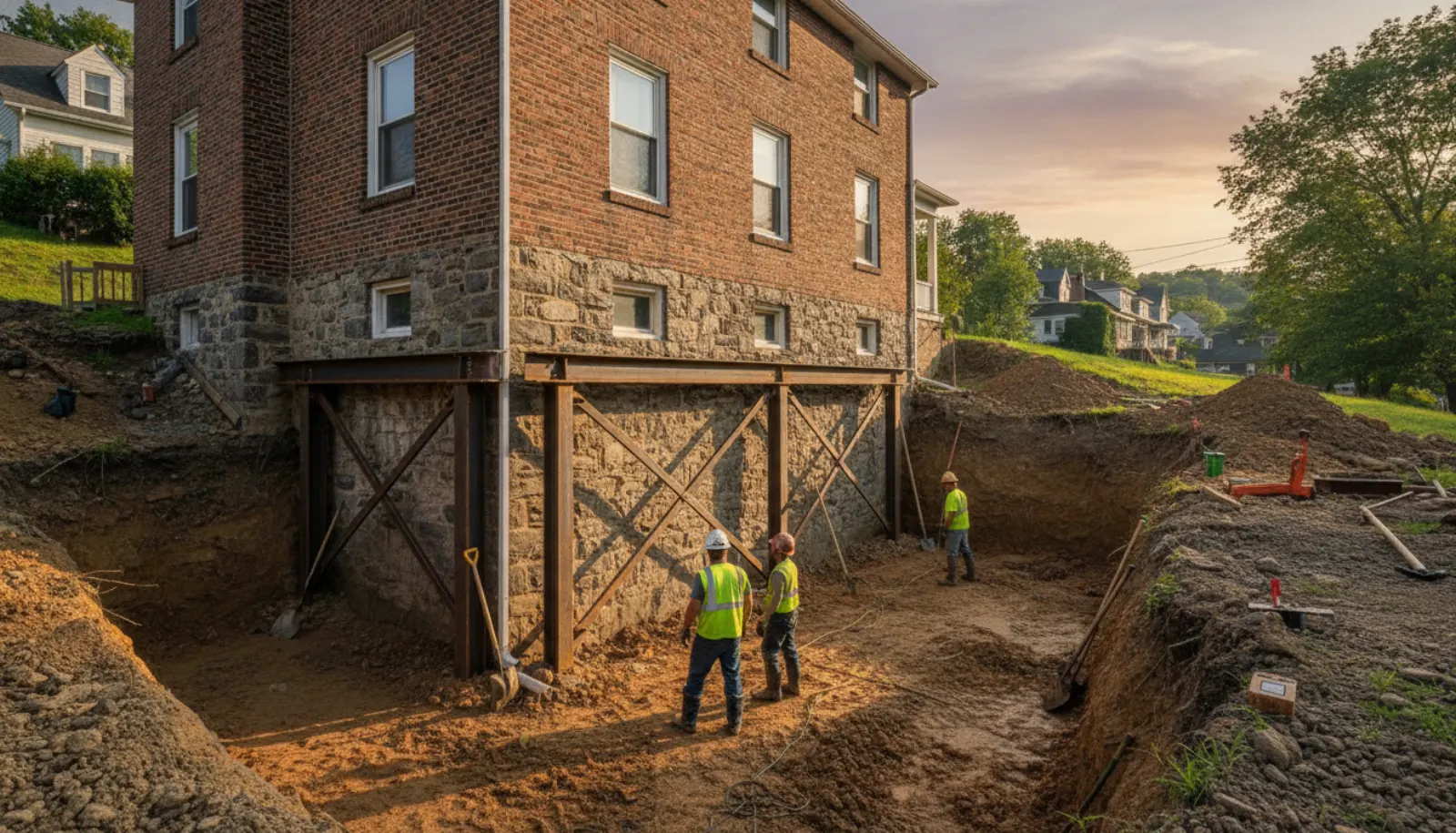
Steel push piers or helical piers go down past the soft soil to firmer ground. The house then rests on the piers, not the moving slope.

Drainage

French drains, footing drains and moving downspouts take water off the hill. Less water means less sliding.

Retaining walls

A new or rebuilt wall, often with drainage behind it, holds the toe of the slope. Tall walls usually need an engineer.

Wall bracing

If the slope is pushing a basement wall in, anchors or braces hold it.

Slope repair

When the whole hill is failing, a geotechnical engineer designs the fix. These jobs can be large. One state geologist told PublicSource that fixing a single landslide can cost up to $1 million.

What it costs

These are typical ranges from published cost guides, not quotes. Hillside jobs vary more than most because of access, depth to firm ground and engineering.

About insurance

Most homeowners policies in Pennsylvania do not cover landslides or other earth movement. Many Pittsburgh owners found this out only after the 2018 slides. State lawmakers have proposed adding landslide coverage to the state program that now covers mine subsidence, but check its status before you count on it. If your house is on a slope, ask your agent what your policy covers today.

What to do before the inspection

  1. Take photos of every crack, inside and out, with a coin or ruler for size. Date them.
  2. Mark the ends of ground and wall cracks so you can see if they grow.
  3. Point downspouts away from the slope. Do not dump water onto the hill.
  4. Do not dig into the slope or pile soil, rocks or debris on it.
  5. Look up your address on the Allegheny County landslide map.

Then call (412) 990-2570 or send the short form for a free inspection of your hillside home.

Frequently asked questions

Does homeowners insurance cover landslide damage in Pennsylvania?

Usually not. The Pennsylvania Insurance Department says most homeowners policies leave out earth movement, including landslides. If you live on a steep slope, ask your agent if a rider for land movement is available.

What time of year do most slides happen?

Winter and spring are the riskiest seasons here. Rain and fast snow melt soak the ground, and wet clay loses its grip on the slope.

How do I know if my house is in a slide-prone area?

Allegheny County runs a landslide map that shows past slides and slopes that are prone to sliding. It is a good first check, but it is not a study of your lot. A site visit is the only way to know what is going on under your house.

Can a house on a moving hill be saved?

Often, if the problem is caught early. Steel or helical piers can carry the house down to firmer ground, and drainage can take water off the slope. If the whole hill is failing, a geotechnical engineer has to design the fix.

Who is responsible for a slide that starts on my neighbor's lot or the city street?

It depends on where the slide starts and who owns that land. Take photos, write down dates, and call your municipality if a public road or wall is involved. A lawyer or your insurer can help with the rest.

Should I leave my home if the slope is moving?

The U.S. Geological Survey says to leave right away if a slide is happening and it is safe to go. Slides can come in pulses, so the first one may not be the last. Then call your municipality and get the house looked at before you go back in.

(412) 990-2570 Free inspection